Sales and Marketing Details
Marketing and sales differ greatly, but have the same goal. Marketing improves the selling environment and plays a very important role in sales. If the marketing department generates a list of potential customers, that can benefit sales. A marketing department in an organization has the goal of increasing the number of interactions between potential customers and the organization. Achieving this goal may involve the sales team using promotional techniques such as advertising, sales promotion, publicity, and public relations, creating new sales channels, or creating new products (new product development), among other things. It can also include bringing the potential customer to visit the organization's website(s) for more information, or to contact the organization for more information, or to interact with the organization via social media such as Twitter, Facebook and blogs.
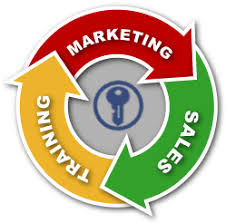
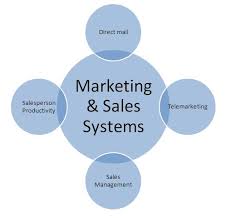
The relatively new field of sales process engineering views "sales" as the output of a larger system, not just as the output of one department. The larger system includes many functional areas within an organization. From this perspective, "sales" and "marketing" (among others, such as "customer service") label for a number of processes whose inputs and outputs supply one another to varying degrees. In this context, improving an "output" (such as sales) involves studying and improving the broader sales process, as in any system, since the component functional areas interact and are interdependent.
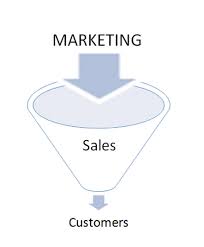
Most large corporations structure their marketing departments in a similar fashion to sales departments[citation needed] and the managers of these teams must coordinate efforts in order to drive profits and business success. For example, an "inbound" focused campaign seeks to drive more customers "through the door", giving the sales department a better chance of selling their product to the consumer. A good marketing program would address any potential downsides as well.

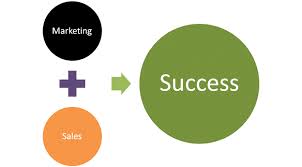







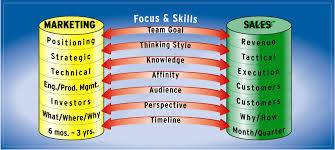
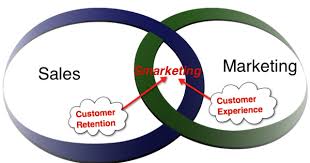
Marketing and sales differ greatly, but have the same goal. Marketing improves the selling environment and plays a very important role in sales. If the marketing department generates a list of potential customers, that can benefit sales. A marketing department in an organization has the goal of increasing the number of interactions between potential customers and the organization. Achieving this goal may involve the sales team using promotional techniques such as advertising, sales promotion, publicity, and public relations, creating new sales channels, or creating new products (new product development), among other things. It can also include bringing the potential customer to visit the organization's website(s) for more information, or to contact the organization for more information, or to interact with the organization via social media such as Twitter, Facebook and blogs.
The relatively new field of sales process engineering views "sales" as the output of a larger system, not just as the output of one department. The larger system includes many functional areas within an organization. From this perspective, "sales" and "marketing" (among others, such as "customer service") label for a number of processes whose inputs and outputs supply one another to varying degrees. In this context, improving an "output" (such as sales) involves studying and improving the broader sales process, as in any system, since the component functional areas interact and are interdependent.
Most large corporations structure their marketing departments in a similar fashion to sales departments[citation needed] and the managers of these teams must coordinate efforts in order to drive profits and business success. For example, an "inbound" focused campaign seeks to drive more customers "through the door", giving the sales department a better chance of selling their product to the consumer. A good marketing program would address any potential downsides as well.
Sales and Marketing
Sales and Marketing
Sales and Marketing
Sales and Marketing
Sales and Marketing
Sales and Marketing
Sales and Marketing
Sales and Marketing
Sales and Marketing
Sales and Marketing
Sales and Marketing
Sales and Marketing
Sales and Marketing
Sales and Marketing
Sales and Marketing
Sales and Marketing
Sales and Marketing

No comments:
Post a Comment